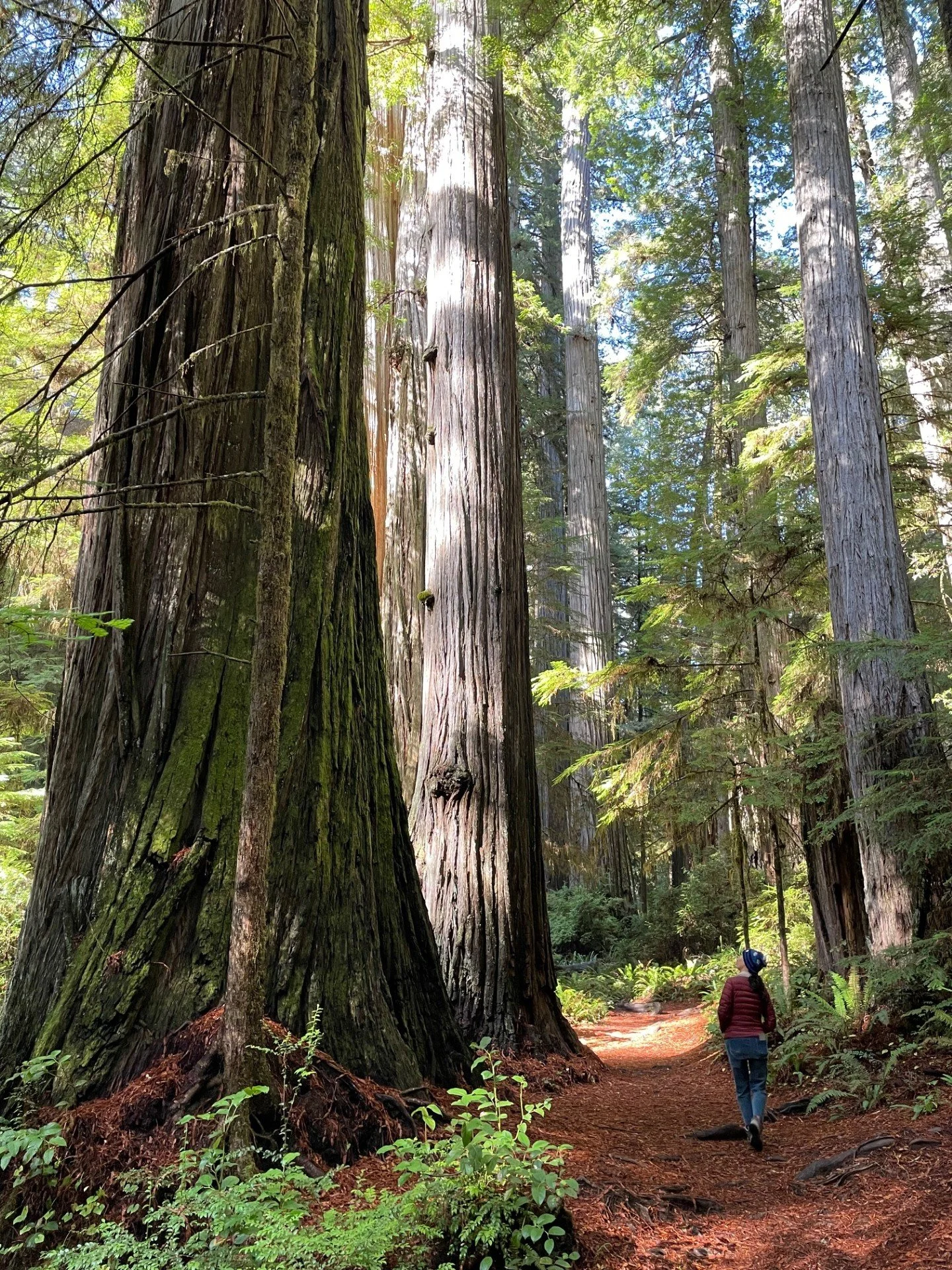
what is posture?
How I hold myself today is the result of countless adaptations my body has made over time.
My childhood in Korea — the way we slept on the floor, the squat toilets, the daily rhythms of floor sitting and squatting.
My first breakup taught my heart how to protect itself.
The very first time I injured my lower back, it felt like something inside me had broken.
The way I felt reborn after my first yoga lesson, and the way I could connect with my sacrum during Pilates classes.
And the freedom of swimming in the ocean with the waves, letting my body tumble.
These experiences, both ordinary and intense, are etched into the way I inhabit my body.
Posture is how my body organizes itself in relation to gravity. It continuously responds to my environment, my history, my internal landscape, my energy, and my sense of safety and comfort.
From this perspective, posture becomes a personal journey of body inquiry — a curious exploration of how my system has learned to inhabit the world.
Posture shapes — and is shaped by — how I sense where I am in space (proprioception), my internal (interoception) and external (exteroception) landscape, how I understand my relationship to the space around me (spatial awareness), and how I sense balance (vestibular awareness).
When these systems communicate clearly, my body organizes itself efficiently in gravity. I can sense and perceive myself more fully — I know where I am, and I know who I am.
How can I sense myself more clearly? How can I perceive myself more fully?
Can I notice the space far behind my back, between my shoulder blades, within my chest and abdomen? Can I sense how my weight distributes through my sit bones? I allow myself to explore subtle movements of the spine — gentle, responsive, never forced.
If I reach my hand toward a distant point in the room, can I feel how that ambient space connects to the center of my chest? How does movement shift when it arises from relationship rather than control?
What about the ways societal, historical, and ancestral influences live in my body? No matter how long I’ve lived abroad, I feel, in my bones and my blood, that I am Korean. This visceral sense shapes not only how I hold myself, but also how I move and relate to the world around me.
Through sensory awareness, I can begin a conversation with my body, cultivating more and more coherence between history, memory, and present experience.
One question I’ve been sitting with is:
What have I not allowed myself to feel by keeping my chest tight?
Maybe it’s the risk of being honest.
The risk of fully feeling myself.
The risk of being me.
And yet, there’s something deeply honest that lives in the body.
I let my posture — my whole being, my gut, my heart, every cell in my body — reflect my dignity.
I love that word: dignity.
It feels bigger than myself. The dignity of my people. The dignity of humanity. To embody a depth of dignity that extends beyond me.
That’s real. That’s what I want to feel in my chest.
That’s how I want my posture to move with me through life.